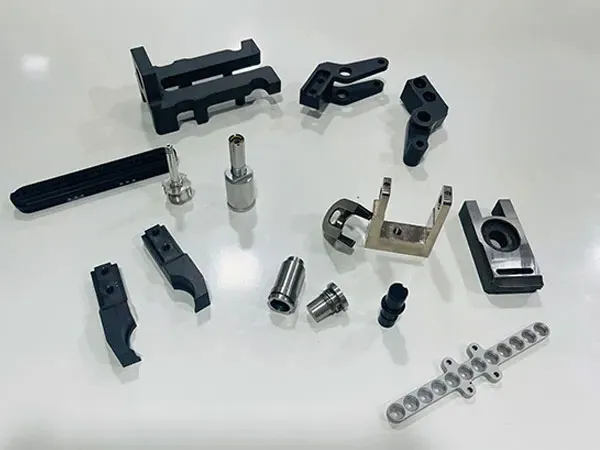
We are one of the leading CNC Milling Components Manufacturer & Supplier in Ahmedabad.
With the use of computer-controlled equipment, material is removed from a work piece to produce a desired
shape or part in the manufacturing process known as CNC milling. Depending on the kind and
sophistication of the CNC milling machine, the cutting tool rotates and moves in different
ways. The process is highly versatile and compatible with various materials such as aluminium, plastics,
wood, and glass.
CNC Milling Components play a vital role in modern manufacturing, enabling precise and
efficient fabrication of a broad range of products across industries. The offered range of components
consists of various intricate parts such as spindle, tool changer, control panel, etc.
Types of CNC Milling Machine
- Vertical Milling Machine
- Horizontal Milling Machine
- Bed Milling Machine
- Turret Milling Machine
- Gantry Milling Machine
Benefits of CNC Miling Machine
- High Accuracy : CNC milling ensures precise and consistent results, reducing the need for manual
adjustments and minimizing errors.
- Cost-Effectiveness : While initial setup costs may be higher, CNC milling becomes cost-effective for
large production runs due to reduced labor and increased repeatability.
- Material Compatibility : CNC milling can work with a wide range of materials, such as metals (e.g.,
aluminum, steel, titanium), plastics, composites, and even certain types of wood.
- Industrial Machinery : CNC-milled components play a crucial role in various industrial machinery and
equipment.
FAQs – CNC Milling Components
1. What are CNC milling components? +
CNC milling components are precision parts manufactured using CNC milling
machines, where rotating cutting tools remove material from a workpiece to create the desired
shape.
2. What materials are used for CNC milling components? +
Common materials include aluminum, stainless steel, mild steel, brass,
copper, titanium, and engineering plastics.
3. What industries use CNC milling components? +
Industries such as automotive, aerospace, medical, electronics, defense, and
industrial machinery widely use CNC milled parts.
4. What is the difference between CNC milling and CNC turning? +
CNC milling uses rotating cutting tools to shape a stationary workpiece,
while CNC turning rotates the workpiece against a stationary cutting tool.
5. What are the advantages of CNC milling components? +
They offer high precision, excellent surface finish, repeatability, ability
to create complex geometries, and reduced material wastage.
6. Can CNC milling components be customized? +
Yes, CNC milling allows complete customization based on drawings, CAD
designs, and specific requirements.